Inside the SkyDeck Fund: Sanjay Velappan, MBA 24, on backing Berkeley’s promising startups

Haas News
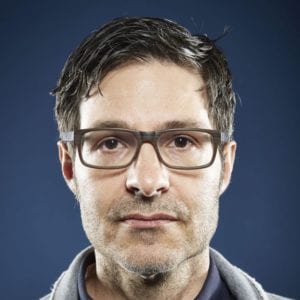

A 14-person company worth $10 billion? Startups with no managers and no plans to hire them—only individual contributors and AI agents? To Professor Toby Stuart, these are some of the wild signs of how radically AI has reshaped entrepreneurship—and that the Bay Area is once again at the epicenter.
Stuart, faculty director of Haas’ new Entrepreneurship Initiative and the Berkeley Haas Entrepreneurship Program, talked with us about the moment we’re in, his idea for a founders track in the MBA program, and what he wants Haas to stand for: “The place to come to launch.”
Give us your quick backstory: How did you become interested in entrepreneurship?
This path goes back to the beginning for me. I did a PhD at Stanford in the early 1990s and wrote my dissertation on the semiconductor industry, which included research on startups and spinoffs. When I started my career, entrepreneurship was in the air and the water. I like to work on nonstatic things and entrepreneurship is an area that’s constantly changing and always pushing the forefront of change. I also love the company of entrepreneurs. I like them as students and as friends.
Why is the Bay Area a good place for entrepreneurship right now?
The Bay Area is the center of the entrepreneurial world again. With COVID and remote financing rounds, venture capital-backed entrepreneurship activity became slightly less Silicon Valley-centered. But with the rise of AI, it’s now concentrated in a way it never has been before. Silicon Valley, more than ever, is the center of the venture-fueled entrepreneurship universe.
Why should entrepreneurial students come to Haas, specifically?
Many students choose Haas because of our excellence in STEM, our location, and our reputation for launching startups: They either have interest in starting something or joining a Silicon Valley company. These days, we’re very proactive in helping students launch companies. Also, once people get here and see the hills, the ocean, the redwood trees, the sunshine, the better question is “Why wouldn’t you come here?”
What makes this the right moment to start a company?
The cost of starting a company has never been lower, and the ability to scale is unprecedented. In decades of studying this phenomenon, I have never seen great startups grow at the pace that is now possible. There are many still-young AI companies with insane metrics.

How is AI changing entrepreneurship?
What isn’t changing because of AI? We’re seeing the emergence of a new cohort of AI-native startups that organize and operate radically differently. Many startups now have a ratio of 25 to 1 or higher, agent-to-human workforces. We are in a period of unprecedented change. And we’re standing on a precipice. I have no idea how to measure this, but I’d wager that the changes in the next 5 years will exceed the cumulative changes of the prior 50 years.
You have an idea for an MBA track that would be designed specifically for founders. Can you provide any details?
I’ve been thinking about starting a “founders school” at Haas for quite a while. Something like Y Combinator meets an MBA. I see this as the result of an evolutionary process. The way we think about entrepreneurship here is to facilitate the founding process. We’ve been very focused on acceleration. We have many MBA students who apply because they’re interested in starting companies and I believe this will be even more true in the future. So, a founders track would signify our plan to double down on this conviction.
If we make this part of admissions to Haas, we will attract a group of ambitious students who really want to create a business. And we would assemble all of our resources to help students in a much more concentrated way. That extends to what we do on the UC Berkeley campus and how we integrate the concept of a founders school into our amazing alumni base and friends of the campus—we build networks rich in know-how and social capital, and introduce our students to this entrepreneurial community.

What is the importance of being part of the UC Berkeley innovation ecosystem?
It’s the main point. There’s a massive ecosystem here. We have thousands of companies that have been built on campus or by our alumni—seminal companies like Databricks and AppLovin. Cofounders come together all across the university.
There’s an abundance of ideas on campus. The harder part is getting the right teams together who are motivated to do this and then getting resources into their hands so that they actually can take big strides forward while they’re on campus. And so the more resources we can bring, the better off the community.
In many ways, Haas serves as a central node in a translational campus where our job is to facilitate the process of moving science and technology into novel business models in de novo companies. We see creating products and services that enrich lives and drive economic growth as an extension of the work of the university. A founders school is a natural next step.
How has that entrepreneurship ecosystem on campus evolved over the years?
UC Berkeley was not historically super entrepreneurship- or tech-transfer-friendly, but over the past two decades, we’ve shifted that dramatically. We now have Darren Cook‘s role as chief innovation & entrepreneurship officer. Chancellor and former Haas Dean Rich Lyons was the first person to hold that job, and he is our most enthusiastic proponent of entrepreneurship. We celebrate our founders. And we have tons of alumni who stay in the Bay Area and build careers in tech.
What happened is we had a series of leaders on campus who realized the importance of taking the seminal research that we do on this campus and converting it into things that are helpful and useful to the world. And that’s in fact something that’s not only healthy for the financial well-being of the university, but it’s a core part of the mission of the university. Research with impact.
We’ve now taken that forward to the point that one of the things that we’re most proud of is the success that the campus has had in spinning up and spinning off seminal, venture-backed companies. It’s amazing to me that we stand atop the PitchBook rankings for the fourth year in a row. So it’s really been a complete transformation.

What is a Haas strength that people outside the building don’t know about?
Maybe the thing that we haven’t marketed so well is we are incredibly involved in the National Science Foundation I-Corps, thanks to Rhonda Shrader, executive director of our Berkeley Haas Entrepreneurship Program. For many years now, Rhonda and her team have worked with scientists from around the country who are funded by the NSF to run their ideas through a very rapid customer discovery acceleration process. It has been enormously impactful. We are a key node in a network of universities that are working with STEM researchers to commercialize their scientific work.
Why is this an important moment for philanthropy and giving back to entrepreneurship programs at Haas?
UC Berkeley is this great institution that has given us all so much. It has unique values and something to say. We need to build on this and move it into the world that’s coming with AI. I would also say that your money goes further here because we have less than our private-school counterparts. We do more with less. We’ve managed to operate as a top 10 school and the top school for producing founders, but we’ve done it with the scrappiness and the resource constraints of a public university.
If you were advising an MBA student on the career paths most likely to remain relevant in this age of AI, what would you recommend?
We have entered a world where expertise at the highest level is free and widely distributed, and that with 100% certainty is going to uproot careers as we’ve traditionally understood them. And so I think this idea that you need to be entrepreneurial but apply that to a career is super important for young people. It doesn’t matter what field you’re in—young people are going to pivot and have much different career trajectories than in the past.
And so I would go back to thinking about where opportunity lies, thinking about what you’re interested in, and finding the nexus of those two—but with the expectation you’ll move around a lot more. And while that is a little bit frightening, it’s going to make life a lot more interesting as well.
Three years from now, when people hear about Haas and entrepreneurship, what do you want them to think?
Come here to launch!
Posted in:
Topics:


